Cyber Nomad Fest 2026 · Bishkek · 22 September 2026
AppSec & DevSecOps: what works and what stays on slides
Experience of implementing AppSec in Central Asia: which best practices transfer to the region and which do not. Four typical failures and what worked in practice.
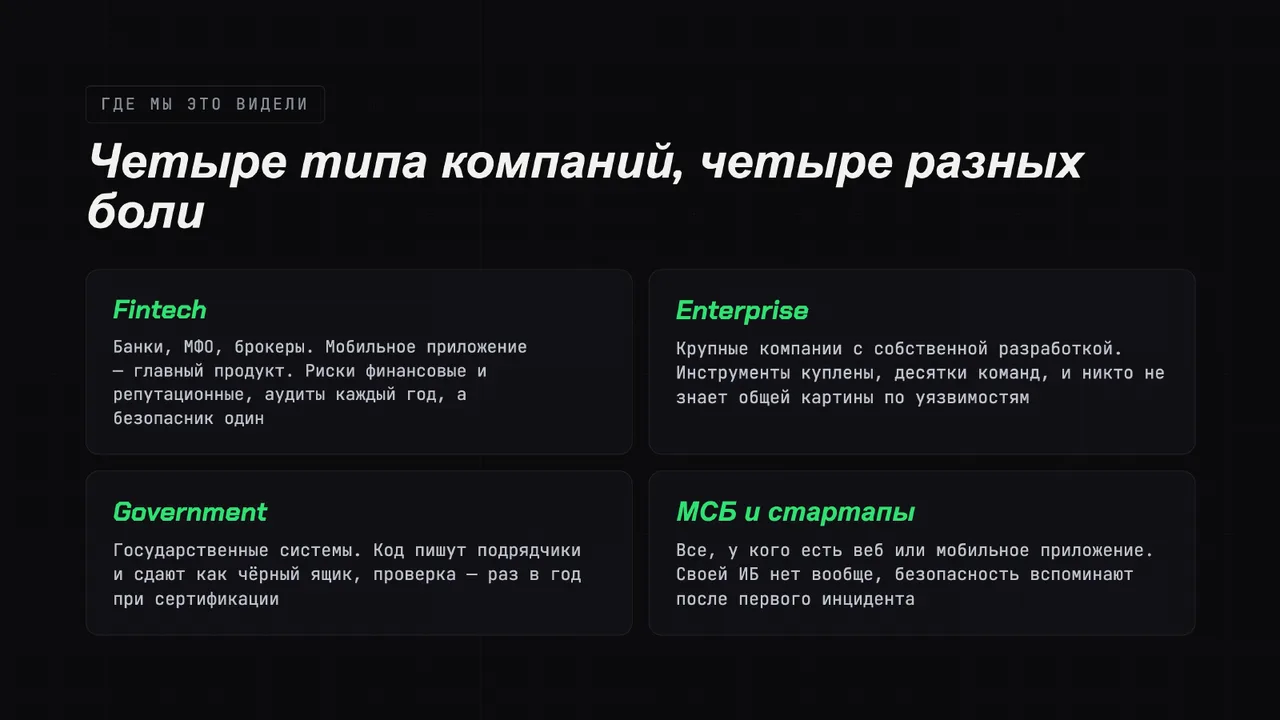
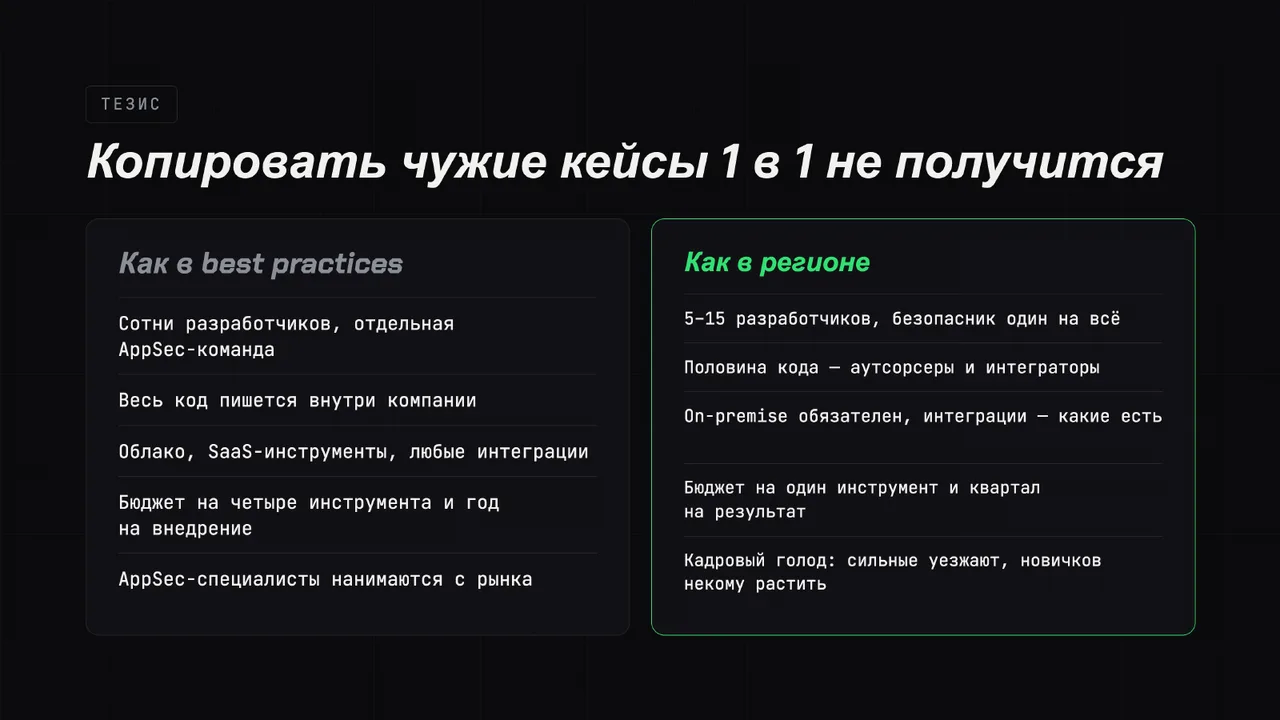
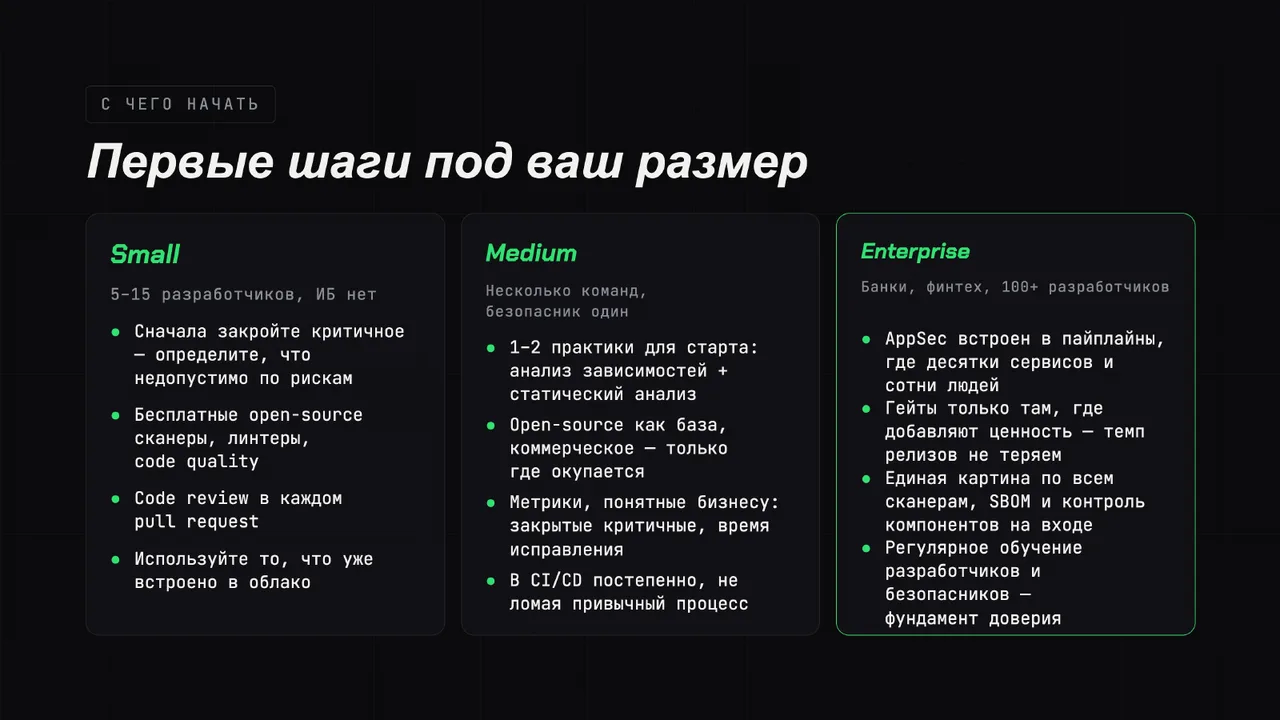
Four types of companies (fintech, enterprise, public sector, SMB) and four different pains. Copying other people's cases 1 to 1 will not work: in the region there are 5–15 developers and one security specialist, half of the code is with outsourcers, on-premise is mandatory, the budget covers one tool.
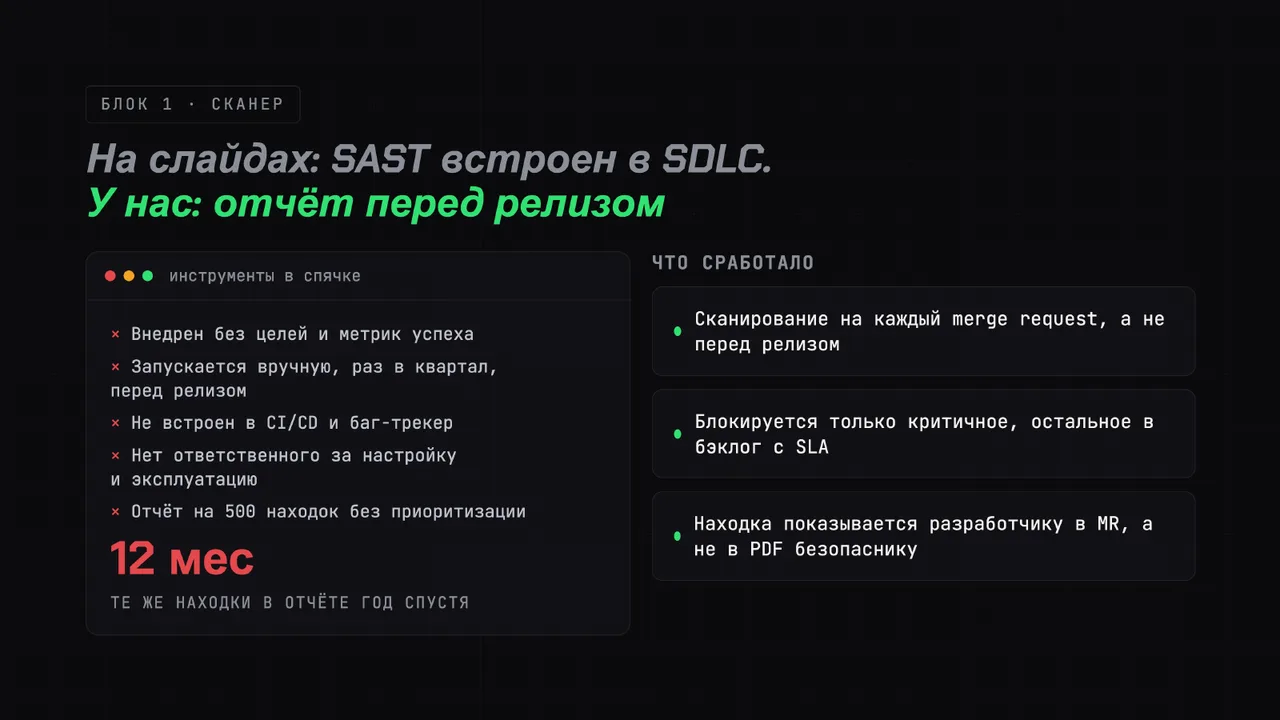
Scanner. On slides SAST is built into the SDLC; in practice it is a report before release. What worked: scanning on every merge request, blocking only critical issues, the finding visible to the developer right in the MR.
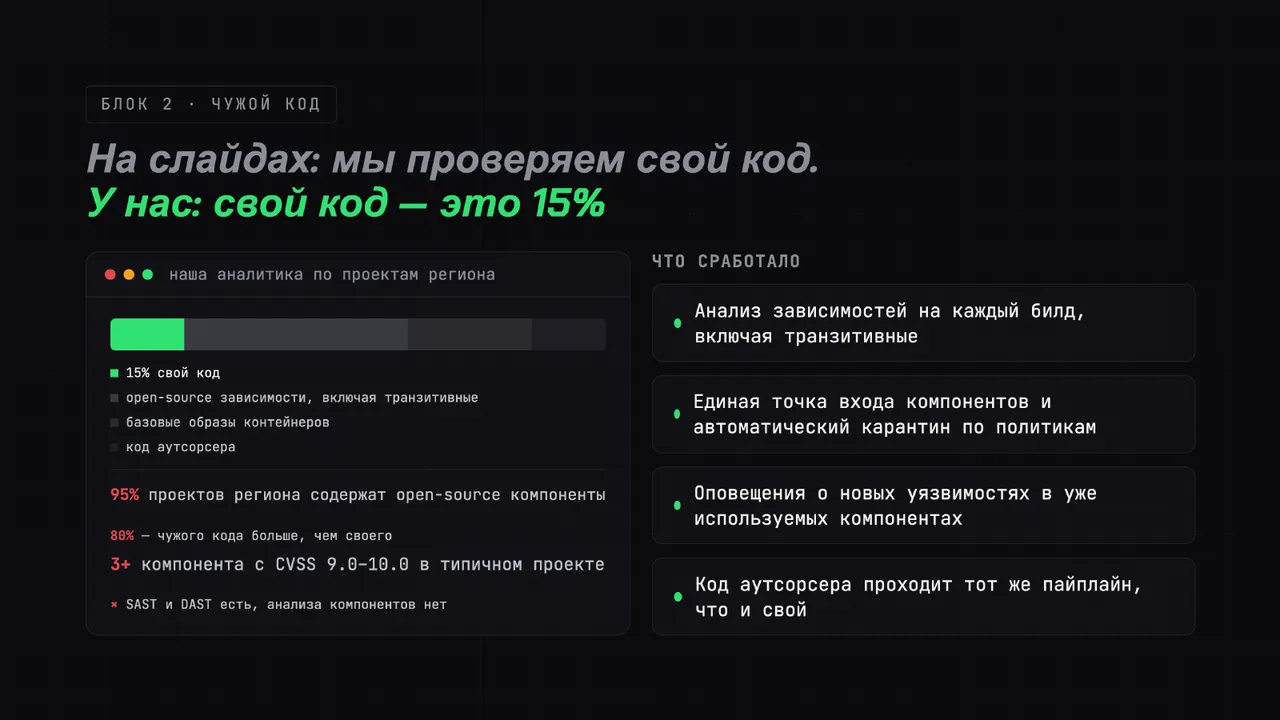
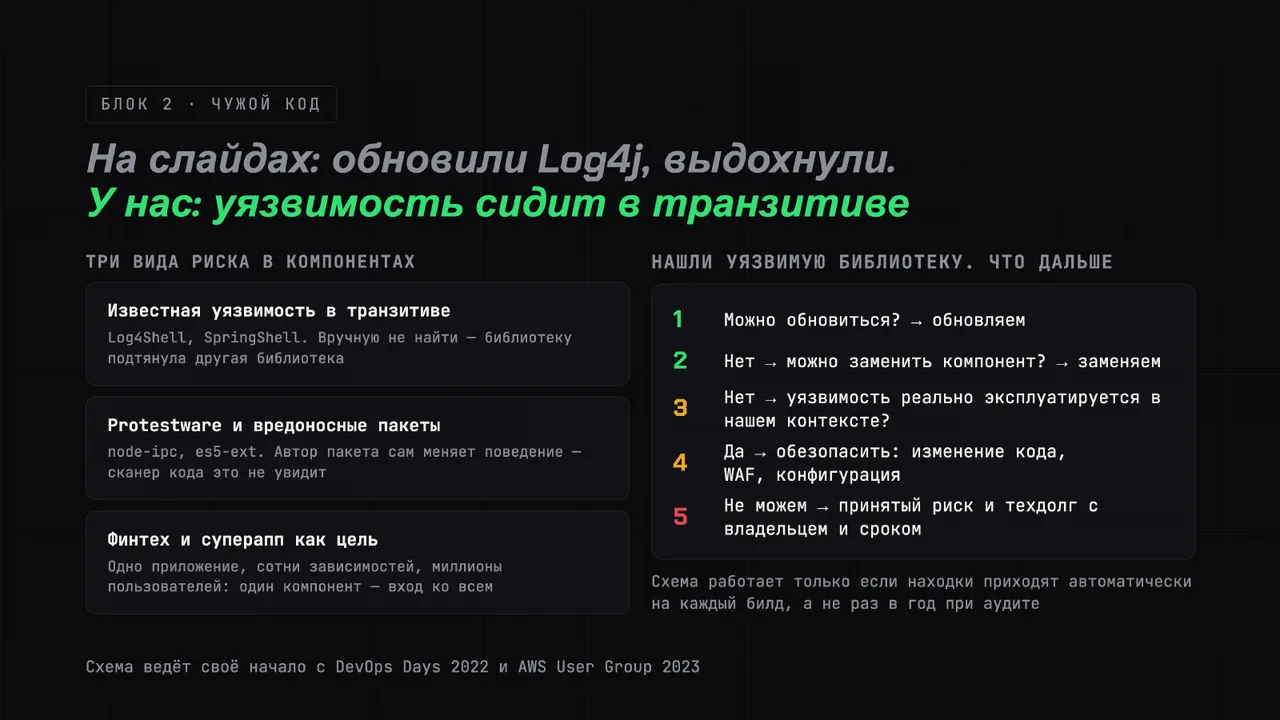
Other people's code. Your own code is about 15% of a project; the rest is dependencies, images and outsourcer code. What worked: dependency analysis on every build, a single component entry point with quarantine, alerts about new vulnerabilities, outsourcer code through the same pipeline.
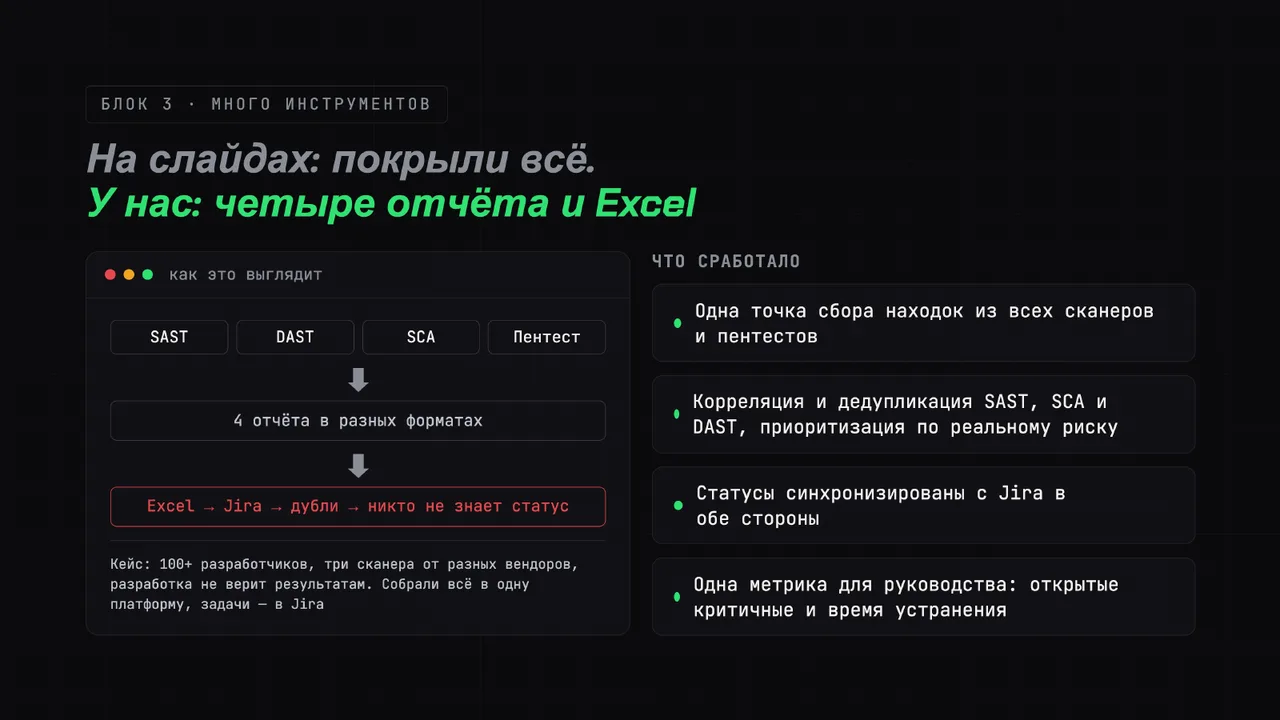
Too many tools. Four reports in different formats and Excel. What worked: one collection point for findings, correlation and deduplication of SAST, SCA and DAST, statuses synchronized with Jira, one metric for management.
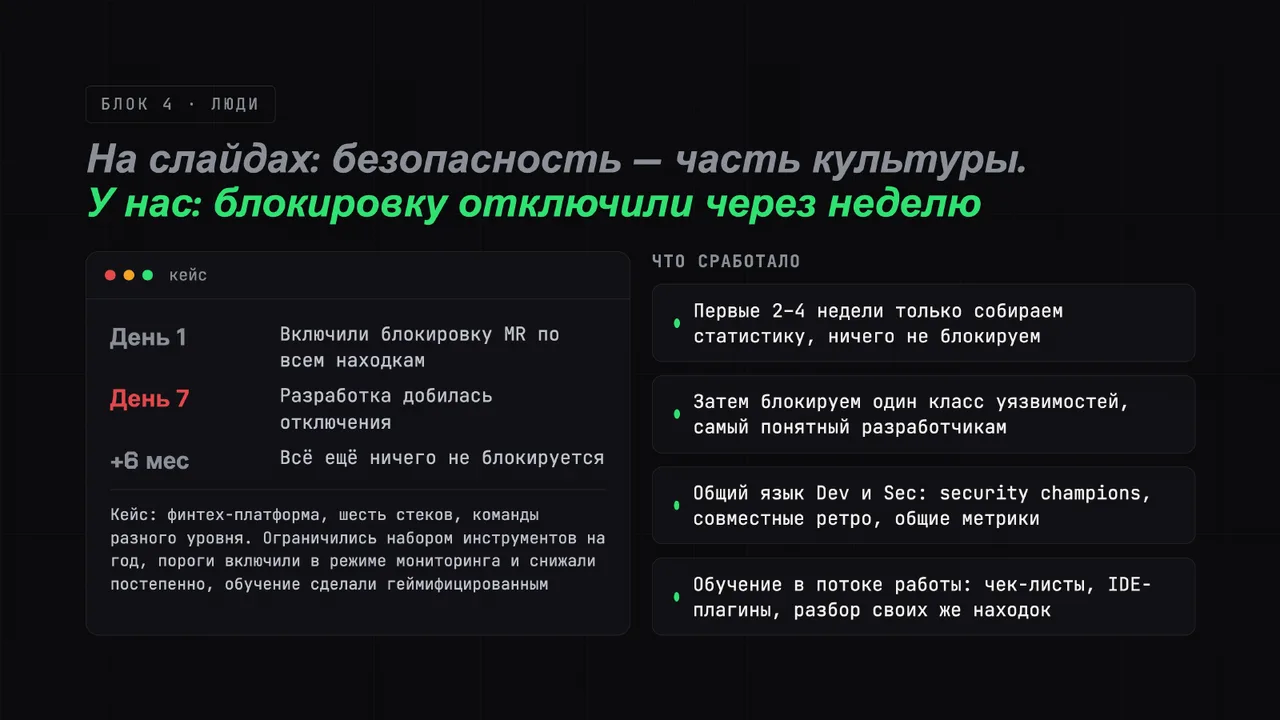
People. The block was turned off after a week. What worked: 2–4 weeks of statistics only, then blocking one clear class of vulnerabilities, security champions, training within the workflow.
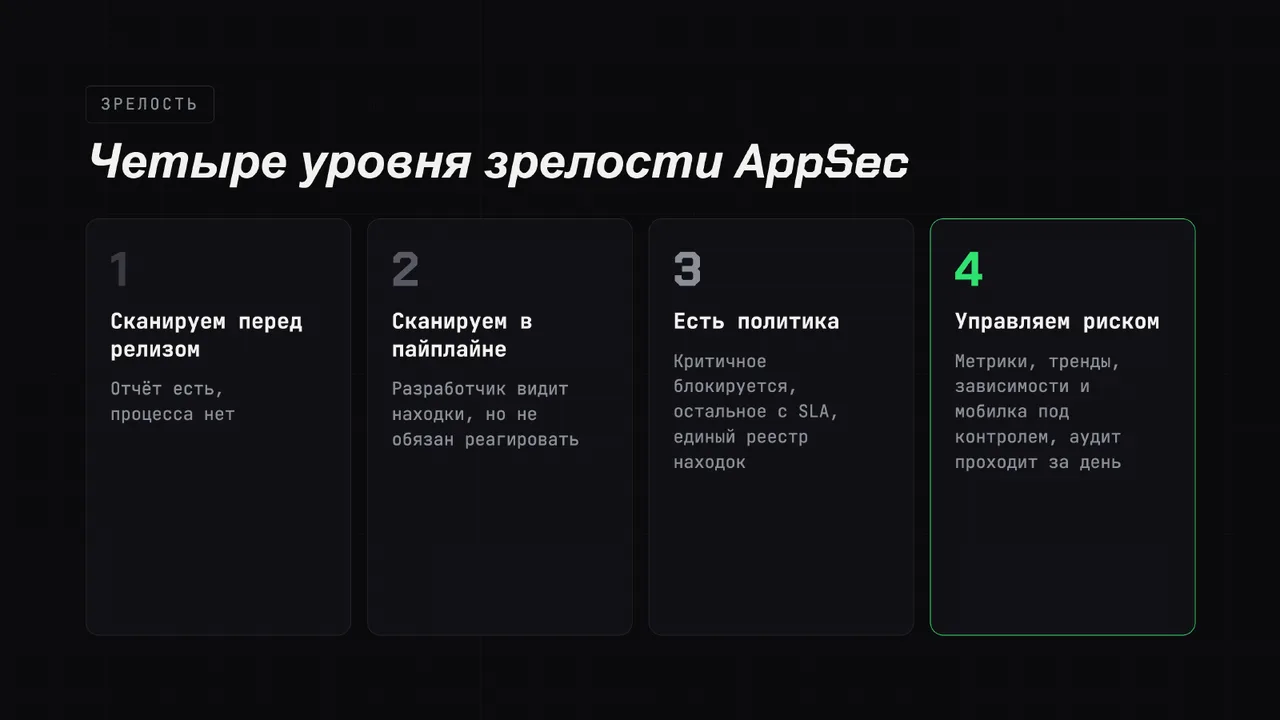
Four levels of AppSec maturity, from "we scan before release" to risk management, and first steps for small, medium and large teams.